Lab 6: The Neurogenic Crustacean Heart
week 7
labs
cardiac cycle
invertebrate
heart
in situ
lobster
Starlingʻs law
sympathetic
parasympathetic
ions
temperature
The physiology of the crustacean heart in action!
Before Lab
This will be our first invertebrate lab. We will be studying the control of the neurogenic heart of crustaceans using the lobster as a model.
Prepare for lab by:
- Read the lab manual for this weekʻs experiment [Lab 6] exploring the physiology of the toad heart using ECG and a force transducer.
- Write the [Prelab] in your lab notebook.
- For the Intro, focus on identifying the physiological mechanisms (outline them), and end with a paragraph of hypotheses/expectations (like the worksheet).
- Think about strong hypotheses! Strong hypotheses lead to excellent reports.
- Methods: subjects, experimental methods and analyses (how you will compare to address the hypotheses – you should start thinking about how you will plot the data for the results to make these answers pop).
- Do prelab Quiz on Laulima (open 24 hrs before lab).
- Please check out the [powerpoint notes] and the review paper on the [crustacean cardiac ganglion] by our very own Dr. Ian Cooke who was an emeritus faculty from the Zoology Department and PBRC, a pioneer in invertebrate neurophysiology!
In Lab:
- Plan to Work quickly! You will have 30 min (and very lucky if you have an hour) once you open the carapace.
- Keep your animal chilled (they are Maine lobsters!) and irrigated with ice-cold Lobster ringers at all times.
- Lab 6 manual [pdf] . Record data in your lab notebook.
- You should have plenty of time to complete the data collection and your figures during lab.
- This will be a Group Lab. Begin planning with your partners as you work.
- Start an outline with your lab partners and start outlining your discussion points, and the rest of the report. Use your time wisely to brainstorm as you work.
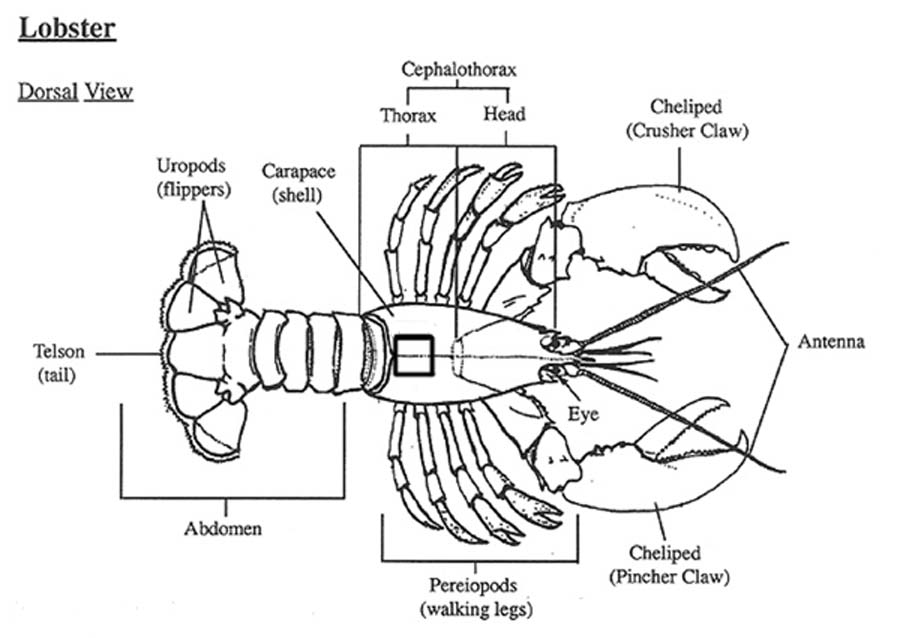
- Lobster external anatomy [jpg]
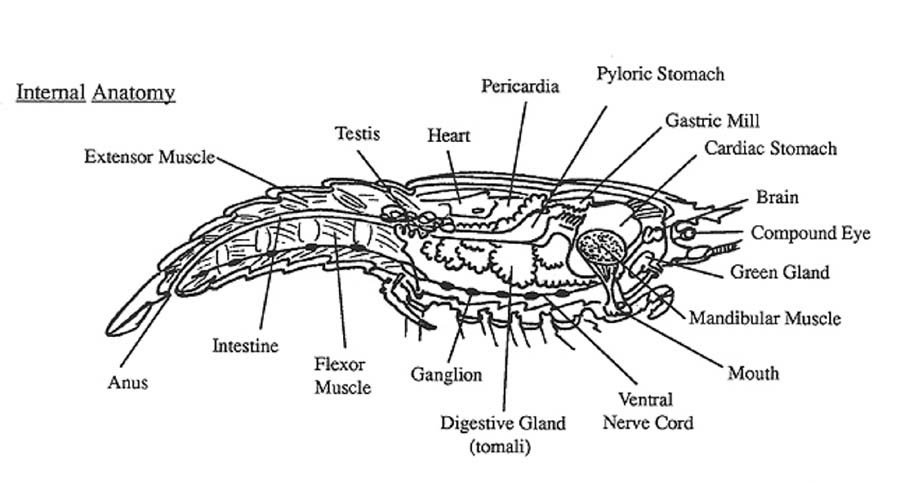
- Lobster internal anatomy [jpg]
After Lab:
- Group lab report due next week. See the guidance at the end of the [Lobster Heart lab manual]. You may also want to look over the guidance at the end of the [Toad Heart Lab].
- Always follow the content guidelines: [grading guidelines]
- It is a good idea to divide up the work of writing the lab by experiment. That way, each person writes a portion of the intro, methods, results, and discussion for their hypothesis.
- Work out your timeline with your lab partners during lab (and plan a face-to-face meet up [hey! you can do your lab EC]) so that everyone has a chance to comment and edit before the lab is submitted.